UAre Brilliant Basics: What Are the Health Benefits of Optimism?

UAre Research Team
Data, Behavioural and Medical Science Specialists
The UAre Research Team brings together leading specialists in healthspan, human performance, and longevity science. Grounded in behavioural change across four core foundations—Movement, Mindset, Relationships, and Habits—our advisors inform proprietary research and power high-impact programs that drive enterprise wellness, employee engagement, and customer loyalty.
Engage an expert
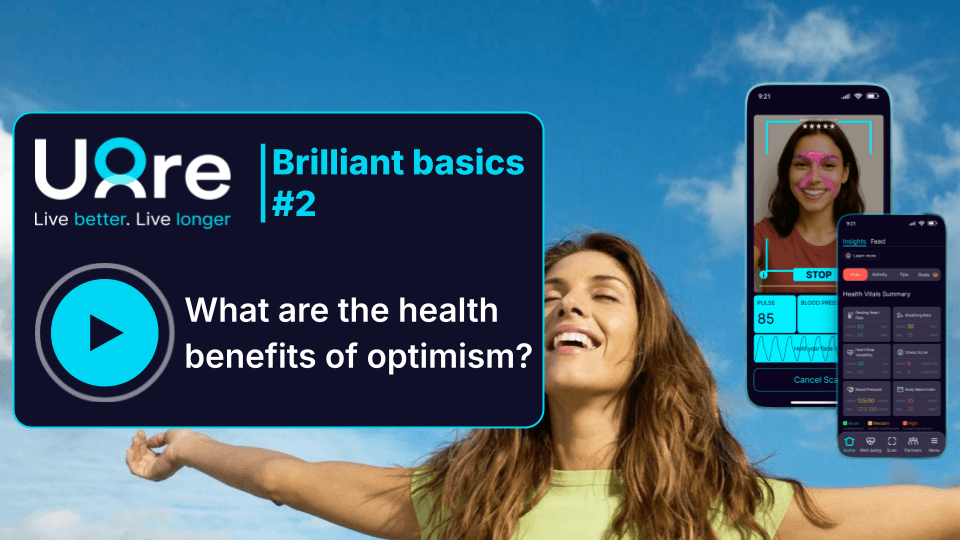
Watch: 3 Simple Habits to Rewire Your Brain for Positivity
Why This Matters to You
Did you know that optimists tend to live longer, healthier, and happier lives compared to their pessimistic counterparts? According to research, optimists are less likely to suffer from depression and heart disease, and they often experience a much higher quality of life and better coping skills when facing serious illnesses.
Additionally, optimists are more successful in their careers, relationships, and personal goals. In short, being optimistic can be a game-changer for your overall well-being.
What Does the Evidence Say?
A study conducted by the Harvard School of Public Health found that optimistic individuals had a 50% lower risk of experiencing a cardiovascular event compared to pessimistic individuals.
Another study published in the Journal of Personality and Social Psychology revealed that optimists were more likely to engage in healthy behaviours such as exercise, healthy eating, and getting enough sleep. Furthermore, a study from the University of Pennsylvania showed that optimists were more likely to achieve their goals compared to pessimists.
As Dr. Martin Seligman, a leading expert in positive psychology, once said, “Optimism is invaluable for the meaningful life. With a firm belief in a positive future, you can throw yourself into the service of that which is larger than you are.”
The Three Most Impactful Things You Can Do
Reframe your thoughts: Instead of focusing on the negative aspects of a situation, try to find the silver lining. Ask yourself, “What can I learn from this experience?” or “How can I grow from this?” By shifting your perspective, you can reduce stress and anxiety and increase your resilience.
Practice gratitude: Spend a few minutes each day reflecting on the things you’re grateful for. This can be as simple as appreciating a beautiful sunset or enjoying a cup of coffee in the morning. Gratitude has been shown to increase happiness and well-being.
Surround yourself with positivity: Spend time with people who uplift and support you. Seek out activities that bring you joy and fulfilment. By surrounding yourself with positivity, you can increase your own optimism and sense of well-being.
Our Advice
Remember, optimism is not about ignoring reality or being naive. It’s about choosing to focus on the positive aspects of a situation and having faith in your ability to overcome challenges.
By incorporating these practices into your daily life, you can cultivate a more optimistic mindset and unlock the many benefits that come with it. So, go ahead and embrace the power of optimism – your mind and body will thank you for it!