UAre Brilliant Basics: How Do Relationships Impact Longevity?

UAre Research Team
Data, Behavioural and Medical Science Specialists
The UAre Research Team brings together leading specialists in healthspan, human performance, and longevity science. Grounded in behavioural change across four core foundations—Movement, Mindset, Relationships, and Habits—our advisors inform proprietary research and power high-impact programs that drive enterprise wellness, employee engagement, and customer loyalty.
Engage an expert
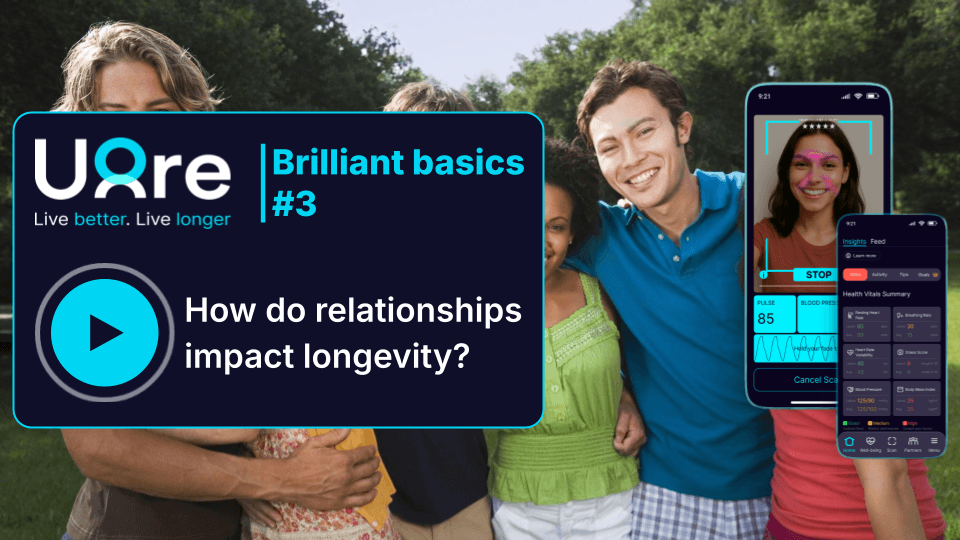
Watch: How Your Friendships Actually Impact Your Lifespan
Why This Matters to You
Did you know that loneliness can be as harmful to your health as smoking 15 cigarettes a day?
While it is often stereotyped as an issue exclusively for older adults, the World Health Organisation stresses that loneliness is a universal crisis, affecting up to 15% of adolescents globally.
A lack of social connections has been linked to a higher risk of heart disease, depression, and even premature death. In fact, research shows that people with strong social ties are 50% more likely to live longer than those who are socially isolated. So, if you want to improve your chances of living a long and healthy life, it’s time to focus on building positive personal relationships.
What Does the Evidence Say
Multiple studies have shown that positive social support can have a significant impact on your health and longevity. One study conducted by researchers at Brigham Young University found that people with strong social connections have a 50% increased likelihood of survival over a given period of time compared to those with weaker social connections.
Another study published in the Journal of Health Psychology found that individuals who felt socially supported had lower levels of inflammation, which is associated with a range of chronic diseases, including heart disease, diabetes, and cancer.
In addition to these studies, many experts agree that positive personal relationships are essential for overall health and well-being. According to Dr. Karen DeSalvo, former Chief Health Officer at Google Health, “Having good social connections is just as important to your health as eating healthy and getting enough exercise.” Dr. DeSalvo also notes that social connections can provide a sense of purpose and meaning, which can help individuals feel happier and more fulfilled.
The Three Most Impactful Things You Can Do
Prioritise quality time: Make an effort to regularly connect with the people who matter most to you. Schedule regular phone calls, video chats, or in-person visits to keep your relationships strong.
Join a group or ask about “Social Proscribing”: Whether it’s a book club, a hiking group, or a volunteer organisation, joining a social group can be a great way to meet new people and build positive personal relationships. If you feel chronically isolated, ask your Doctor about local “social prescribing” programs to help you find a safe and supportive starting point.
Practice active listening: When you’re talking to someone, make a conscious effort to really listen to what they’re saying. Show interest, ask questions, and offer support. Active listening can help strengthen your relationships and foster deeper connections.
Our Advice
It’s never too late to start building positive personal relationships. Whether you’re young or old, introverted or extroverted, there are steps you can take to improve your social connections.
Make a conscious effort to prioritise your relationships, get involved in your community, and practice active listening. By doing so, you’ll not only improve your health and longevity but also enhance your overall quality of life.